Computer Tips and Tricks
Get the latest posts via rss
Showing posts with label Microsft. Show all posts

Monday, 4 January 2010

Microsoft Project Server 2007 on Server 2008 R2

We recently had a request for a clean install of Microsoft Project Server 2007. As we are currently, where possible, installing only Server 2008 R2 boxes, it was agreed to install Project on an R2 Box.

Having looked at the pre-requisites as follows, this looked to be a simple install.

 Windows SharePoint Services 3.0 or Office SharePoint Server with recent updates

Windows Server 2008 requires an updated version of Office SharePoint Server 2007 and Windows SharePoint Services 3.0.

Application Server role

Running ISINTEG on Microsoft Exchange 2007

When you have the unfortunate issue of a corrupt data store in Exchange 2007, and the event logs are showing, for example, event ID 1160 for source MSExchangeIS you have to rely first on good old ISINTEG.
Now, nothing new here, ISINTEG has been around for many years and versions of Exchange, but when I recently had to run it I found that the listed format for running this did not work in Exchange 2007 i.e. ISINTEG –FIX
ISINTEG is in the same place as all other versions of Exchange the \BIN folder. If you have a standard install this will be located in C:\Program Files\Microsoft\Exchange Server\Bin .
To get this to run and fix the errors we were experiencing I did as follows;

Monday, 21 December 2009

Enable Windows 7 Administrator Account GPO

By default, as was with Vista, the local Administrator account in windows 7 is disabled. If you are deploying Windows 7 across a number of clients on a network etc. you may find the need to enable this account for future trouble shooting client machines. Also remember, even if you enable the Administrator account, and then run Sysprep, the sysprep process disables the Administrator account.
By far the easiest way to enable the Administrator account on client machines in a domain is to use Group Policy, here is how you achieve this.
I am assuming you have the basic understandings of applying/creating Group policy settings on a Windows Domain, if not, leave a comment and i will see how i can help further.
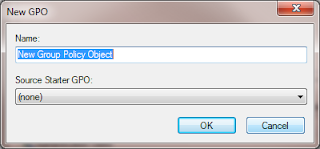
Go ahead and open “Group Policy Management”, for testing purposes, it may be worth creating a new policy on a test OU, and placing some test client accounts within that OU. So Right click your OU and select “Create a GPO in this domain, and Link it here”. The new GPO pox will prompt you for a Name, so go ahead and give it a meaningful Name, and click OK.

Wednesday, 16 December 2009

Configuring Windows Server 2008 R2 DHCP Split-Scope

At last with Windows Server 2008 R2 Microsoft have introduced an easy way to provide some form of redundancy for DHCP servers with the new Split-Scope Wizard. Administrators have always had to provide some form of DHCP redundancy in larger networks, this was usually done by manually splitting scopes across more than one server, and if a lot of scopes are required this can be a laborious job, and not the easiest to manage.
So what have Microsoft introduced now? Lets presume that you have 2 DHCP servers configured on your network. On server 1 you go ahead and configure your DHCP scope as you always have, include any Scope Options, server options etc. When you define your scope, include all the range that you will be wanting to split, for example a new scope;
IP Range 10.1.1.100 – 10.1.1.200
So, nothing new so far, once you scope is configured, right click on the new scope, select advanced, and then Split-Scope,

Using Windows Live Writer with Blogger

Following on from my recent posts about publishing blogs to Blogger with Word 2007 and word 2010 and the associated issues with uploading images i have given Windows Live Writer a try.
As i am sure you are aware this is a free utility available with the Windows Live family. Once downloaded and installed its easily enough to configure to use with Blogger. When you first open it, it asks for connection information to your existing blog site like so


Tuesday, 15 December 2009

Using Word 2007 as your Blog Editor.


I was looking around to see if I could find a Blog editor to use locally on my clients rather than creating and editing directly within the online blogger tools. To my surprise, I found that you can publish directly from Microsoft Word 2007 to you blog on Blogger, so I thought I would give it a go.

It looked easy and straight forward enough, just click on publish and select Blog